Fashion6 min read
Virtual garment fitting: body scanning, size recommendation and avatar try-on compared
Three different technologies get sold as virtual fitting. They solve different problems and cost very different amounts. Here is which one does what.
By CharpstAR · 4 Oct 2023 · Updated 22 Sept 2026
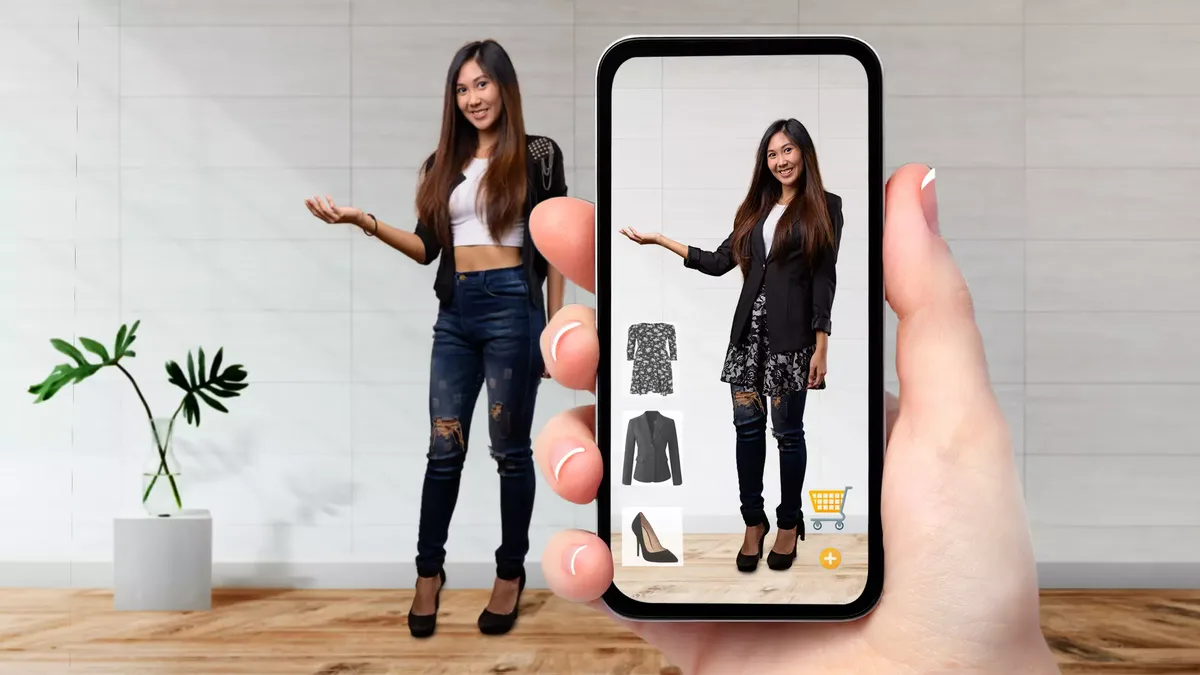
"Virtual fitting" is a shop window with three quite different products behind it. One measures the shopper's body. One predicts a size from data without measuring anything. One shows the garment on an avatar so the shopper can judge how it looks. Vendors rarely say which one they are selling, and buyers end up with the wrong tool for the problem they had.
This article separates them, says what each one actually solves, and is honest about where the whole category is weaker than the marketing.
First, name the problem
There are two distinct customer problems hiding under "fit", and they need different answers.
The first is sizing. The shopper is between a 38 and a 40 and does not know which to order, so they order both or order neither. This is an information problem and it is the one that drives most size returns.
The second is appearance. The shopper cannot tell how the garment will hang, whether the cut suits them, or whether the colour works. This is a confidence problem, and it drives abandoned carts more than returns.
Most disappointment with virtual fitting comes from buying a tool that solves the second problem and expecting it to fix the first.
The three technologies
Body scanning
The shopper photographs or films themselves, usually turning on the spot, and software estimates body measurements from the images. Some systems ask for height and weight and infer the rest. Output is a set of measurements, which the retailer then maps to size charts.
What it solves: sizing, in principle, and better than anything else on this list.
What goes wrong: the shopper has to do work. Standing against a blank wall in tight clothing and turning around is a real ask in the middle of a purchase, and completion rates reflect that. Accuracy is also uneven across body types and clothing, and an estimate that is three centimetres out on a chest measurement lands a customer on the wrong side of a size boundary. Scanning also collects body data, which means a privacy and consent conversation with your legal team before it ships.
Best use: high-value or made-to-measure items, where the customer is motivated enough to spend two minutes on it. Poor use: a fifteen euro t-shirt.
Size recommendation
No camera. The shopper enters height, weight, age and perhaps their usual size in another brand, and the system recommends a size using data from past purchases and returns. The good ones improve over time because they learn from what came back.
What it solves: sizing, statistically, for the majority of ordinary body shapes.
What goes wrong: it needs volume to work. A new brand with a small order history gets generic recommendations, which is not much better than a size chart. It is also invisible as a marketing asset. Nobody shares a screenshot of a size recommendation.
Best use: any catalogue with enough sales history. This is the least glamorous option on the list and usually the most cost-effective one for reducing size returns.
Avatar or AR try-on
The garment exists as a 3D model and is displayed on an avatar, either a generic body, a body adjusted to the shopper's rough proportions, or the shopper themselves through the phone camera.
What it solves: appearance and confidence. The shopper sees the drape, the length, the way a print sits on a body.
What goes wrong: it does not measure anyone. Fabric simulation is good enough to be convincing and not good enough to be a fitting room. Building the garment as a simulation-ready 3D asset is also the most expensive option here, because every fabric needs physical properties, not just a texture.
Best use: styling-led categories, marketing, and social. Also genuinely excellent for rigid accessories, where the physics problem disappears entirely.
The comparison, in one table
| Body scanning | Size recommendation | Avatar or AR try-on | |
|---|---|---|---|
| Solves | Sizing | Sizing | Appearance and confidence |
| Shopper effort | High | Low | Low to medium |
| Data needed from you | Accurate garment measurements | Sales and returns history | A 3D model per garment |
| Cost to run | High | Medium | High per item |
| Privacy exposure | Significant, body imagery | Low | Low to medium |
| Effect on size returns | Potentially large | Reliable and moderate | Small |
| Marketing value | None | None | Real |
The category everyone forgets: rigid accessories
The physics problem that makes garment fitting hard does not exist for glasses, watches, bags, jewellery or shoes seen from above. These are solid objects. A phone tracks a face or a surface accurately, and a correctly scaled 3D model appears at true size.
This is why eyewear AR works so much better than trouser AR, and it is where most fashion retailers should put their first money. The technology is mature, the delivery path is standard, and the shopper's question is genuinely answered.
Delivery is also simple. A GLB model runs in the browser through a viewer, and tapping the AR button hands the same product to the phone's own AR: Scene Viewer on Android and Quick Look on Apple devices. There is nothing for the shopper to install.
Does any of it pay for itself?
Returns are the number that justifies these projects. The National Retail Federation and Appriss Retail put United States returns at 743 billion dollars in 2023, 14.5 percent of sales, with the online rate at 17.6 percent. Apparel sits at the expensive end of that.
On the conversion side, Shopify's merchant data from 2020 showed product interactions with 3D or AR content converting 94 percent more often than comparable products without, and Rebecca Minkoff reported shoppers who viewed a product in AR were 65 percent more likely to buy and 44 percent more likely to add a 3D-viewed product to cart.
Read those carefully. They are conversion figures, not return figures. Anyone quoting a precise percentage reduction in garment returns from avatar try-on should be asked for the study.
A sensible sequence
Put real garment measurements and fit notes sourced from your returns data on every product page. That costs almost nothing and it attacks the sizing problem directly. Then add size recommendation if your order history is big enough to feed it. Then build 3D and AR for your rigid accessories, where it reliably works. Only then, and as a measured test on a handful of styles, look at avatar try-on for garments.
We build the 3D side of that, mostly for furniture, eyewear and home products, and the same pipeline applies to any product with a fixed shape. Sweef and Contura both use it to answer size and space questions before checkout rather than after delivery. You can see the range of what we build on the solutions page, and the plans start at 10 dollars per product per month.
If you want to judge the quality rather than the claim, send us one product and we will model it for free. Free sample here.
Sources
- National Retail Federation and Appriss Retail, 2023 Consumer Returns in the Retail Industry.
- Shopify, merchant data on 3D and AR content, September 2020, AR shopping, and 3D ecommerce.
- Google, Scene Viewer.
- Apple, AR Quick Look.