3D for e-commerce6 min read
One 3D model, reused: ads, social, email, product page and print
The content-reuse case for 3D, with the actual workflow. What one model produces, who does each step, and where the reuse argument breaks down.
By CharpstAR · 25 Sept 2023 · Updated 22 Sept 2026
Part of 3D models for e-commerce: the complete guide

Most articles about 3D in marketing sell the product page. The product page is the smallest part of the value. The bigger argument, and the one that usually gets the budget signed, is that a single 3D model is a reusable source for almost every image your marketing team needs for the next several years.
This is how that actually works as a workflow, what each output costs in time, and where the reuse argument is weaker than it sounds.
The asset, and what it is
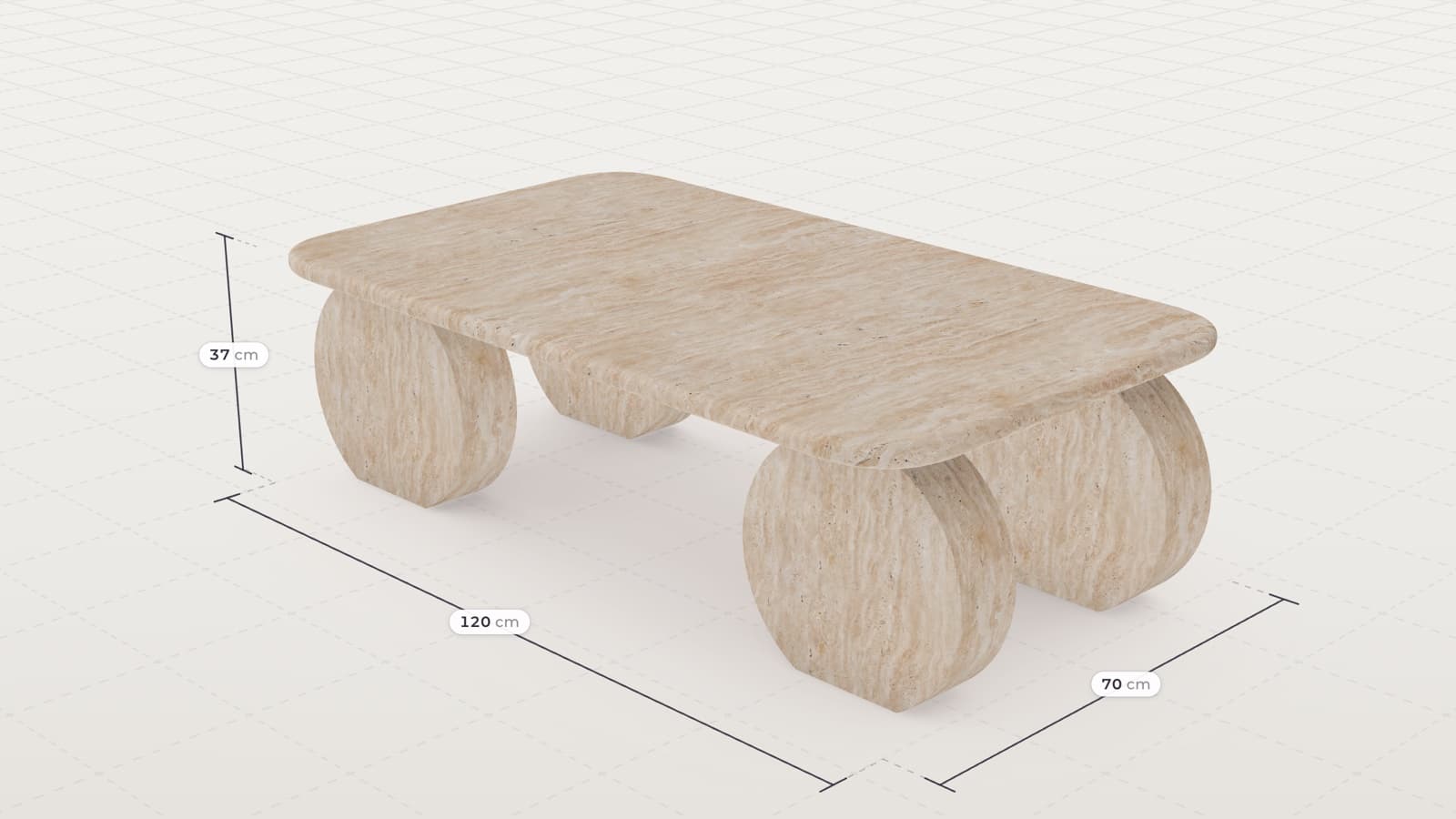
A 3D model of a product is geometry plus materials. The geometry is the shape, measured to the real dimensions. The materials are the fabric weave, the wood grain, the metal finish, built so they respond correctly to light.
Once that exists, it is not a picture of your product. It is the product, in a form a computer can photograph from any angle, in any lighting, in any scene, without shipping anything anywhere.
That distinction is the whole reuse case. A photograph answers one question from one angle in one room. A model answers every question you think of later.
What one model produces
Product page imagery. Render the standard angles your template needs: front, three-quarter, back, detail. Consistent across the entire catalogue, because the camera and the lighting are the same file every time. This alone fixes the ragged look most catalogues have after five years of different photographers.
An interactive viewer. The same model, loaded live in the product page, so the shopper rotates and zooms it themselves.
AR on a phone. The same file again, handed to Scene Viewer on Android or Quick Look on Apple devices, so the shopper stands the product in their own room at true size. No app.
Lifestyle scenes. The model dropped into a rendered room, a garden, a kitchen. Change the wall colour, change the season, change the styling props, without a location, a stylist or a van.
Paid social and display creative. Turntable animations, exploded views, before-and-after scale comparisons. Video creative from a still budget.
Email and newsletter images. Rendered per campaign, on-brand, matched to whatever the promotion is.
Print and trade. High-resolution renders for catalogues, trade-show panels and retail POS. The model has no resolution limit, so the same asset serves a web thumbnail and a two-metre banner.
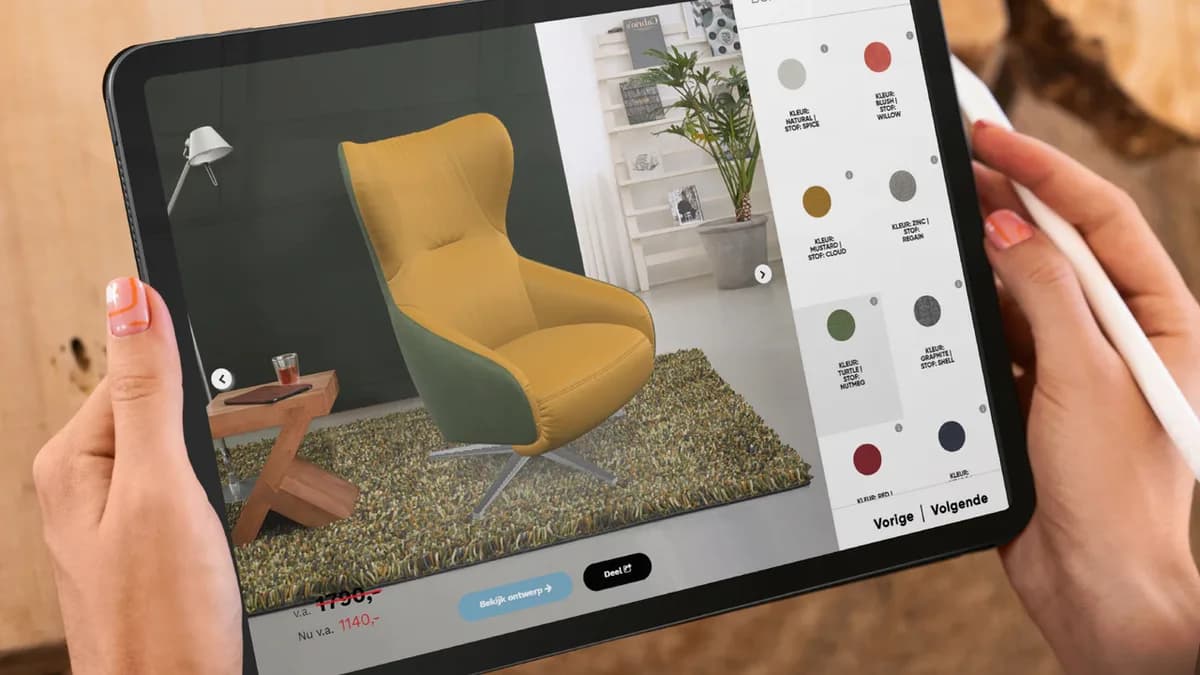
Variant imagery. The expensive one. If a product exists in twelve fabrics, a photo shoot is twelve shoots. A model is one asset plus twelve material swaps.
The workflow, step by step
Step 1, brief. You send photographs from every angle including the back and underside, full dimensions, material close-ups and the commercially important variant list. CAD files if you have them shorten the job a lot. The commonest cause of a slow first model is a missing measurement, because a modeller can infer a shape from a photo but cannot infer that a seat height is 43 centimetres, and a model that is five percent wrong is worse than none because it looks convincing.
Step 2, modelling. A 3D artist builds geometry, then materials, which is where most of the hours go. A first model is typically about a working week to your approval. Later products in the same family go faster because the material library already exists.
Step 3, review. You look at it, mark what is wrong, it gets fixed. Most products take one or two rounds.
Step 4, delivery for the web. GLB for the browser and Android, USDZ for Apple, both kept small. Google's guidance is under 10 megabytes with 15 as the maximum; Shopify's advice is that an ideal GLB is around four megabytes. A heavy model on a phone is a conversion problem, not a feature.
Step 5, integration. A viewer snippet in your product template plus a field on the product record mapping SKU to model. Usually an afternoon of developer work on a normal platform.
Step 6, render outputs. From here your marketing team requests images rather than shoots. Turnaround for a new render from an existing model is short enough that it fits inside a campaign cycle rather than ahead of one.
Where the reuse argument breaks down
Be honest about four things.
| Limit | What it means in practice |
|---|---|
| Model quality caps every output | A weak model produces a weak render, a weak ad and a weak product page all at once. Cheap 3D is expensive because it fails everywhere simultaneously. |
| Humans and complex scenes are still hard | Products render well. People, pets and busy lifestyle scenes are a different discipline and often still cheaper to photograph. |
| Someone has to own render requests | If nobody is responsible for producing images from the model, the marketing team keeps booking shoots out of habit and you pay twice. |
| Product changes need model updates | A new leg or a new fabric means a model revision. Budget for it, or the asset library drifts out of date. |
What our clients get out of it
MELIMELI is the clearest version of this. The same sofa model drives the configurator on the site and the rendered marketing imagery, including fabric close-ups, which means a new colourway is a material swap rather than a shoot. Sweef uses one modular asset to cover a combinatorial range of layouts that would be impossible to photograph exhaustively. Contura uses the model both for the configurator and for placing a stove in a customer's living room at real size.
On the commercial side, the published evidence is about the product page rather than the wider reuse. Shopify's merchant data from 2020 showed interactions with 3D or AR content converting 94 percent more often than comparable products without, and Rebecca Minkoff reported that AR viewers were 65 percent more likely to buy and 3D viewers 44 percent more likely to add to cart. Shopify also reports that Oakywood, after adding 3D configuration, went from almost no custom orders to roughly 200 to 300 a month. The reuse saving itself is specific to your photography budget, and the only honest way to size it is to count what you spent on shoots last year.
How to build the case internally
Take last year's photography invoices. Count the shoots, the reshoots caused by a variant change, and the studio days. Then count how many of those images could have come from a model you already owned. That is your number, and it comes from your own accounts rather than from a vendor's slide.
Our plans are priced per product per month for exactly this reason: catalogues change, and the model changes with them without anyone finding budget for a re-shoot. Basic starts at 10 dollars per product per month on a 12-month term. Value is 20 dollars per model per month on a 24-month term and includes five rendered product images and a 360 viewer, which is the tier most marketing teams want. Both begin at a minimum of 100 products or variants. The full range is on the solutions page.
If you want to see the output quality before committing, send us one product and we will model it for free, renders included. Free sample here.
Sources
- Shopify, merchant data on 3D and AR content, September 2020, AR shopping, and 3D ecommerce for the Oakywood, add-to-cart and file-size figures.
- Google, Scene Viewer.
- Apple, AR Quick Look.